
Strategy
What a failing vacuum cleaner retailer teaches us about strategy
Godfreys traded for more than ninety years, then ran out of reasons for customers to choose it. The lessons are ordinary ones, which is what makes them useful.
The end of it
Ninety-three years, then nothing.
Godfreys grew into one of the largest specialist vacuum retailers in the world before the category moved on.
1931
the year Godfreys was founded
93
years of trading
June 2024
administrators wound the business up
Nil
recovery for creditors
The end of a high street veteran
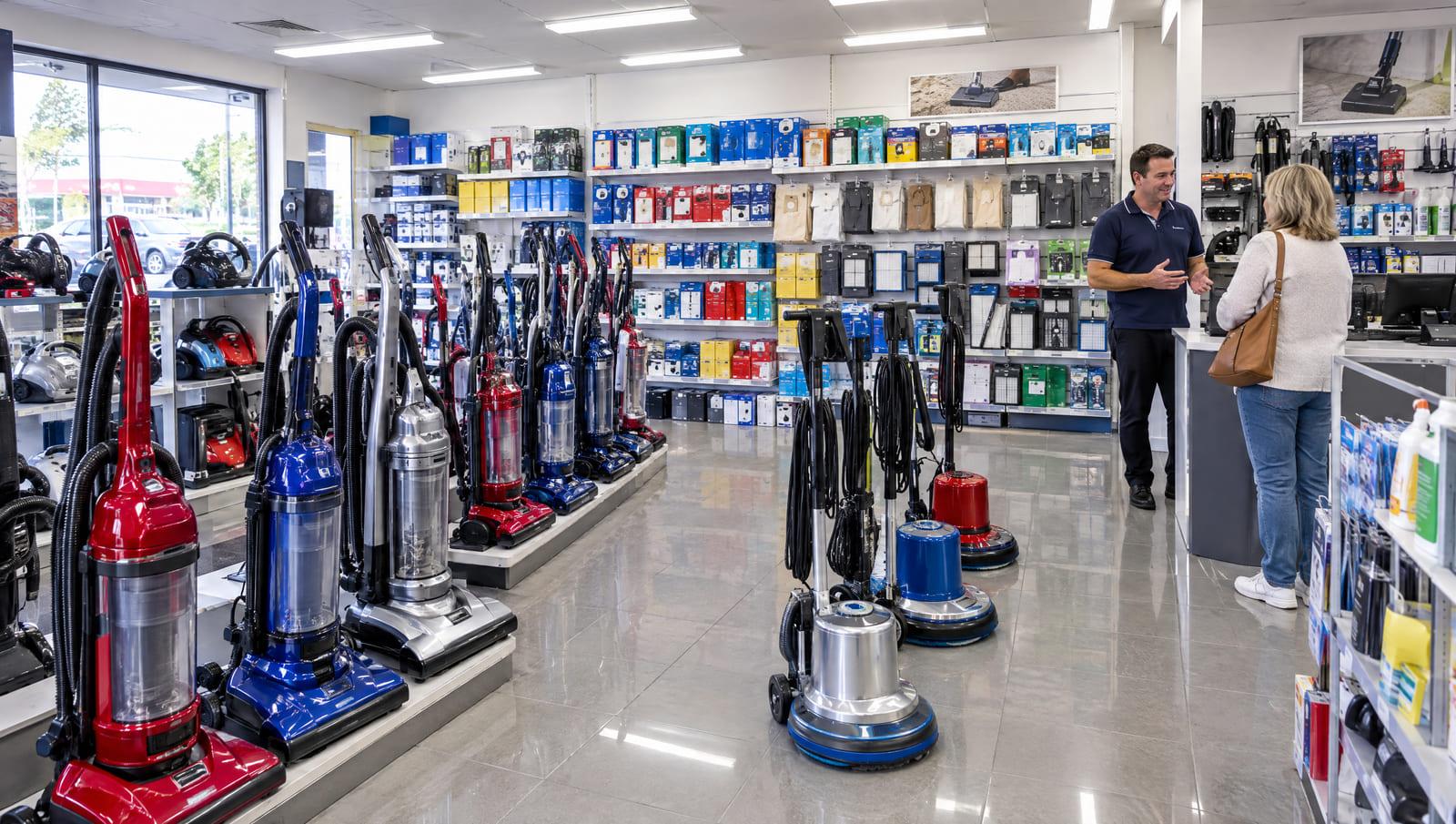
A specialist vacuum cleaner retailer on the high street is a curious thing. It made more sense in 1931, when a vacuum was a considerable household investment and buying one warranted the technical help of a sales assistant. From those origins Godfreys became one of the largest specialist vacuum retailers anywhere.
Over time the category lost its salience. Buying a vacuum became functional, and broader appliance retailers served it perfectly well.
Alongside that structural decline, Godfreys chose not to stock Dyson. Dyson had set the category alight with bagless technology, but the margins were thinner than the brands Godfreys was used to, so it passed. The result was a retailer with an inferior range and no meaningful source of advantage.
When rates and costs rose, wage and rent inflation met a subdued revenue line. Having failed, unsurprisingly, to find a buyer, the administrators closed the business on 4 June 2024, with creditors facing a complete write-off.
You need a clear reason to be chosen
Why should a customer come to you, particularly when conditions are tight? Most businesses believe they are distinctive, so the question rewards a hard, objective answer.
For differentiation to mean anything it has to be difficult for competitors to copy: proprietary technology, privileged access to a product line or a resource, a different process, or a capability others cannot assemble quickly. Nothing matters more to a strategy than being able to answer this plainly.
Structural change creeps
Structural shifts arrive slowly enough to be ignored, and they quietly undermine business models that used to work.
It is worth taking a zero-based look at the strategy every few years: what would the best strategy be, without the baggage of how the business currently operates? Comparing that with what you do now shows the weak points while there is still time to act on them.
Watch the disruptors
Dyson is the obvious disruptor in this story. Stocking it would probably not have saved Godfreys on its own, but declining to carry the hottest product in the category certainly did not help.
New models and products appear constantly and most come to nothing. Australia often lags the United States and the United Kingdom in adoption, so watching those markets buys time to work out which threats are real and to plan a response.
The counter-example
Shaver Shop looks, on the face of it, like the same bet: a narrow category on the high street, when you can buy razors in any supermarket.
Underneath, the position is far more durable. Despite the name, it covers hair styling, oral care, beauty, massage and fragrance as well as shaving, which removes the single category exposure that caught Godfreys, and most of those categories are bought more often than a vacuum cleaner.
It also carries a market-leading range and negotiates exclusives with leading brands, rather than declining the products customers want. Add a strong online capability, small low-cost stores and good service, and the sources of differentiation are real.

Capability
Our strategy capabilities.
Most of our strategy work starts with a conversation about the decision in front of you, and what would have to be true for each way out of it.