The Value Creation Blueprint
The first 100 days are the time to test the assumptions behind an acquisition and start the highest-priority work. Zenith’s Value Creation Blueprint links the investment case to the initiatives management will deliver during ownership.

Value creation through the ownership period
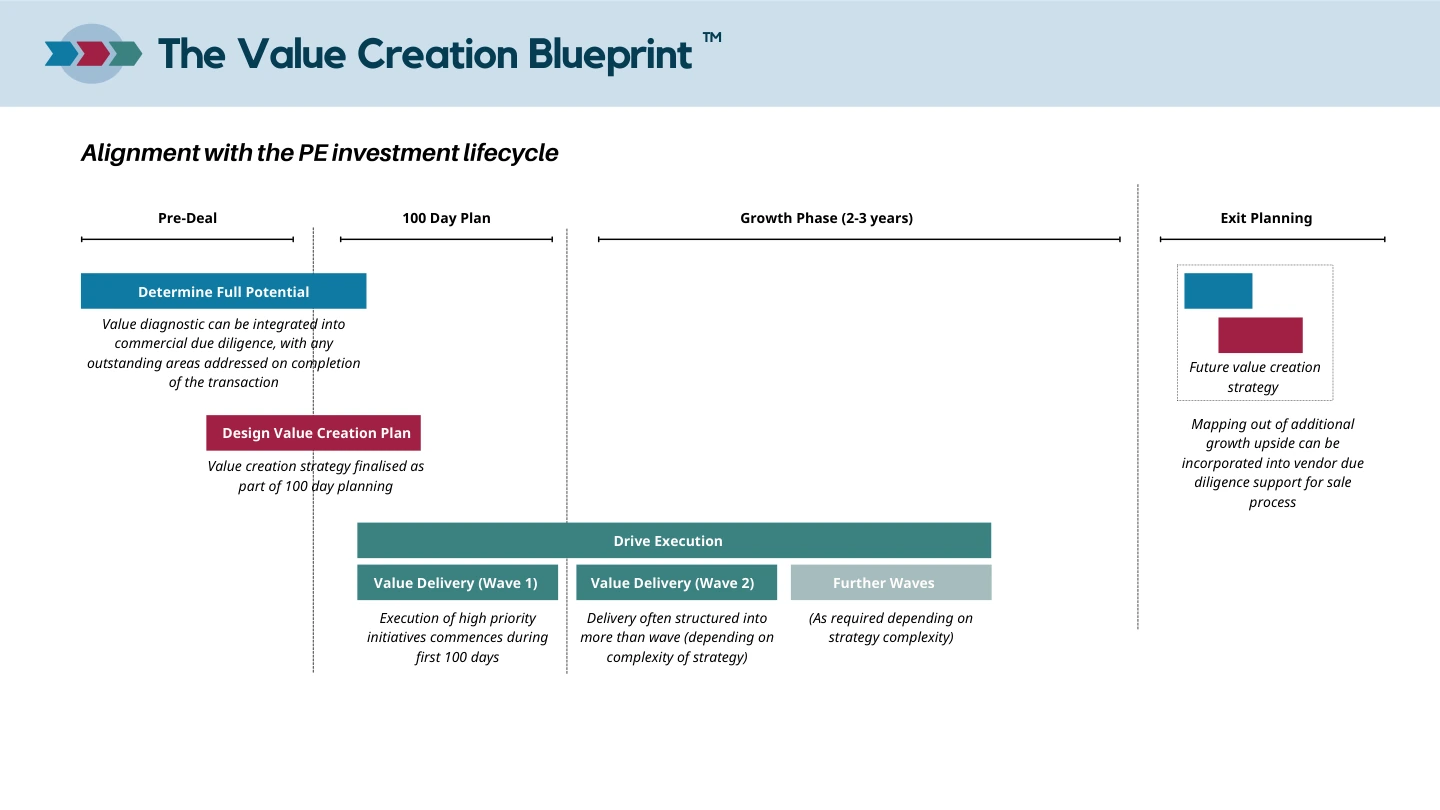
Commercial due diligence gives the deal team an initial view of the company’s potential. After completion, management can test any outstanding assumptions with customers, operating data and employees. It can also start initiatives where the evidence is already clear.
Zenith’s timetable shows the plan taking shape in the first 100 days, followed by successive waves of investment and improvement. As exit approaches, vendor due diligence can show a prospective buyer the gains already delivered and where further growth is possible.
Pre-deal
Assess the company’s full potential during commercial due diligence.
First 100 days
Complete the value creation plan and start the highest-priority initiatives.
Growth phase
Deliver initiatives in waves over the next two to three years, as management capacity allows.
Exit planning
Document the financial gains and the growth opportunities available to the next owner.
The company’s full potential
A market can be growing while a portfolio company loses its most profitable customers. The assessment brings together market growth by segment, customer behaviour and the financial contribution of individual products and accounts. Expert interviews help explain changes in competition that may take time to show up in the accounts.
Management workshops and a review of internal capabilities then test what the company can deliver. For example, an opportunity to sell into a related market may depend on a new distribution partner or an operating system that can handle higher volumes.

Six sources of value
The investment case determines which opportunities warrant management time and capital. The Blueprint examines six areas when developing the plan.
- Revenue optimisation
- Review price, terms, product mix and customer retention to identify where changes can improve revenue quality and margin.
- Operating model
- Trace costs to the work that generates them. Assess whether processes, systems and support functions can handle the planned growth.
- Industry structure
- Map profit pools and the roles of suppliers, distributors and competitors. Consider where to participate and whether consolidation could improve the company’s position.
- Value adjacencies
- Test opportunities in related products, customer segments or regions. A partnership or a new business model may provide a route to market.
- Corporate portfolio management
- Decide how to allocate capital across businesses, which activities to share and where an acquisition could deliver operating benefits.
- Capital structure
- Assess how much cash the business can release from working capital or non-core assets and what that means for funding and equity value.
Governance, planning and tracking
The plan assigns responsibility and resources to each initiative. Senior management resolves issues that affect several functions and reviews progress against the financial assumptions. Aligning incentives with the expected benefits gives the people doing the work a stake in the result.
A value delivery program office brings operating measures and financial results into the same review. If an operational milestone is complete but margin or cash flow has yet to improve, the team can investigate the difference and adjust the next stage of work.
Results from portfolio companies
The following cases come from Zenith’s account of its engagements on pages 9, 11 and 14 of the report.

Equipment hire
2× EBIT after the turnaround
Following the merger of two hire providers, Zenith and management identified about 20 turnaround initiatives. The improvement in earnings enabled a recapitalisation and an exit for investors.

Building materials
10% reduction in the cost base
Faced with weaker demand and pressure on its balance sheet, the supplier combined a strategic review with a cost reduction program. It returned to net profitability after the initial phase.

HVAC wholesale
>4× return on investment
Commercial due diligence identified growth and operating improvements that informed the price negotiations and the 100-day plan. Revenue and operating margins exceeded plan. The fund sold to a trade buyer after four years.